

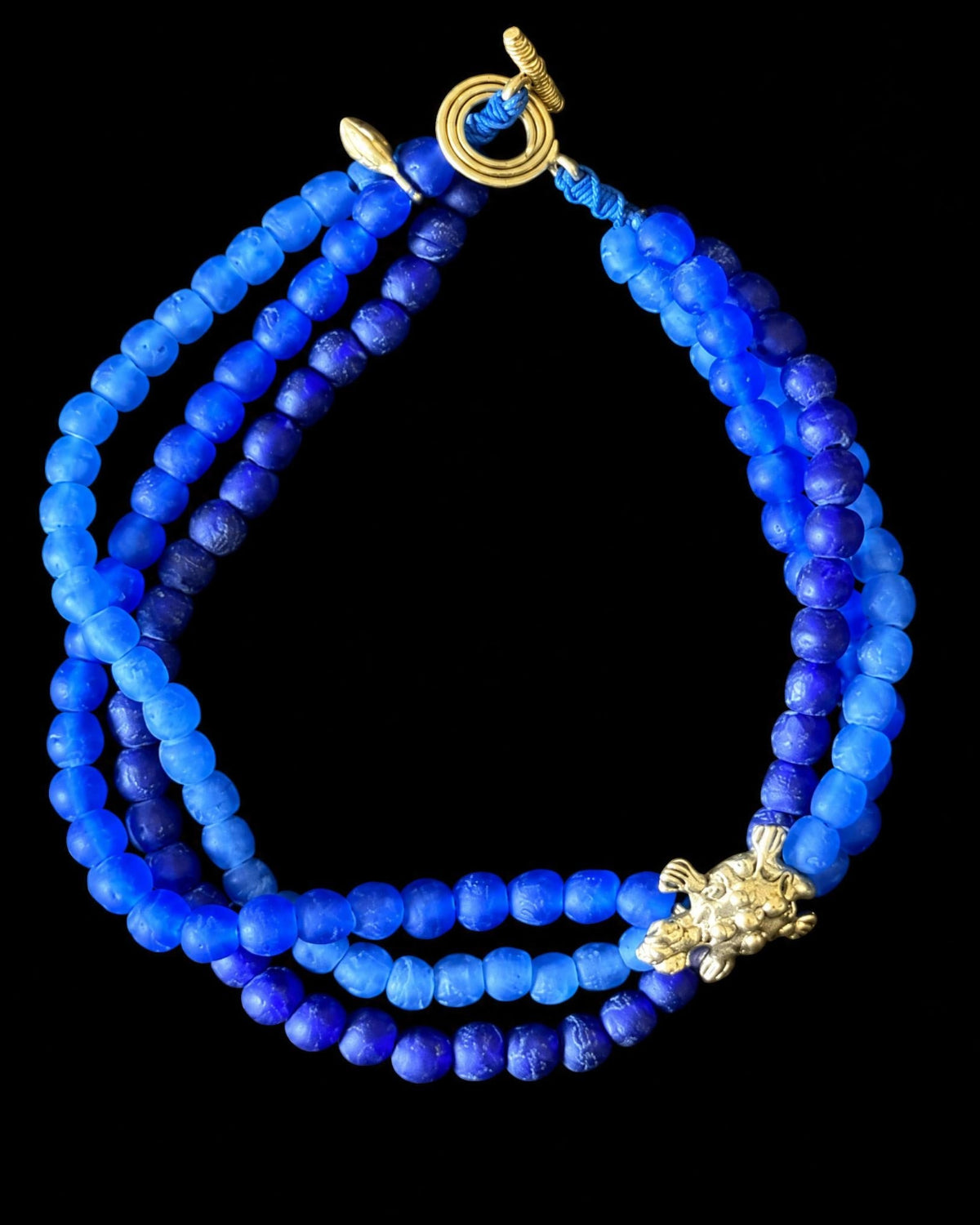
A beaded necklace made of multiple strands of round blue beads in varying shades, with a gold toggle clasp and a small gold decorative accent, shown on a solid black background.
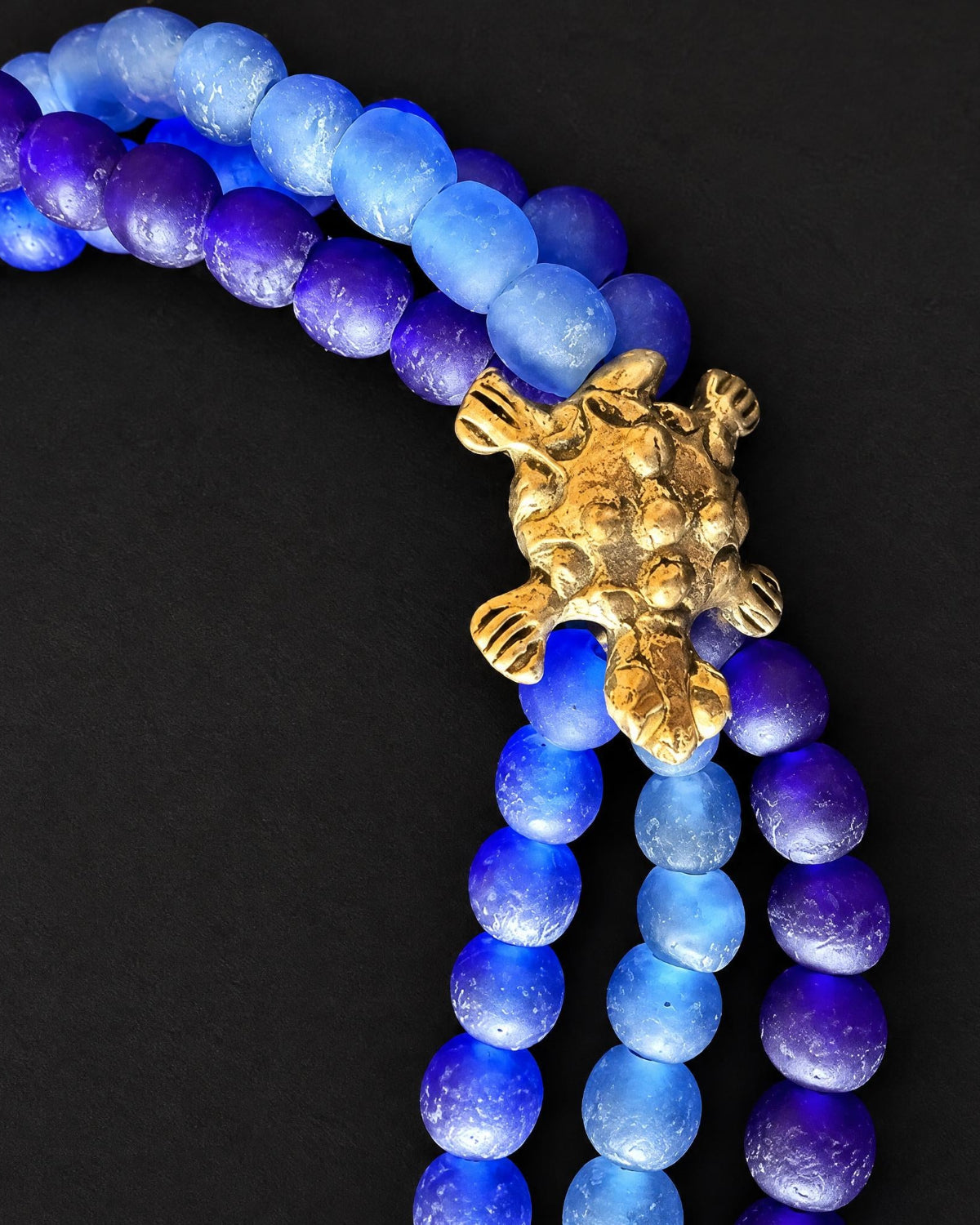
A close-up of a beaded necklace with strands of translucent blue and purple beads, featuring a prominent textured gold turtle charm at the center, set against a solid black background.
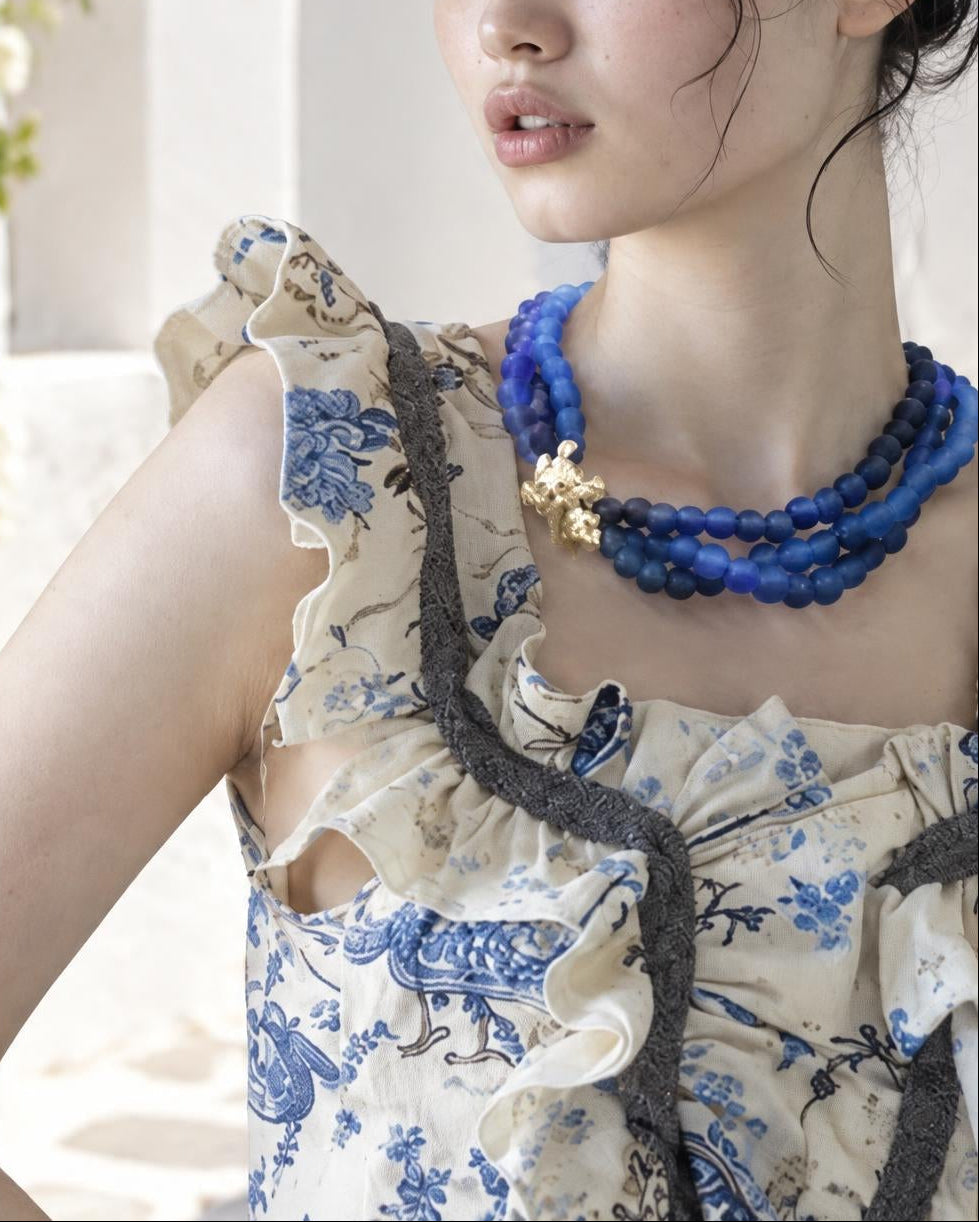
A woman with dark hair in a messy bun wearing a cream and blue floral ruffled top and a blue beaded necklace, posing outdoors in front of a white archway with green plants.

The Lost wax Collection | Grand Lagoon Necklace

The Lost wax Collection | Grand Lagoon Necklace

A captivating composition of three strands of hand-crafted recycled glass beads, layered in luminous royal, soft and deep blues. The asymmetrical pendant, a brass turtle adds a distinctive touch, cast by master artisans in Kumasi, Ghana.

The beads are individually crafted from discarded glass bottles, melted and transformed by hand using traditional moulds. Their softly irregular surfaces and subtle variations catch the light beautifully, giving the necklace an organic depth and an unmistakably artisanal character.
The brass turtle is one-of-a-kind: crafted in a time-intensive process using the ancient technique of lost wax casting, every peice is uniquely made for every necklace.

An elegant statement piece where rich colour, skilled craftsmanship and the quiet beauty of transformation come together.

Slight variations in shape and finish make each piece individual.

Size:
48cm end-to-end

Materials:
Recycled brass and recycled glass

Regular price €165,00
Regular price Sale price €165,00
VAT included. Shipping calculated at checkout.
Quantity:
A beaded necklace made of multiple strands of round blue beads in varying shades, with a gold toggle clasp and a small gold decorative accent, shown on a solid black background.
The Lost wax Collection | Grand Lagoon Necklace
Regular price €165,00
Regular price Sale price €165,00

Who made it?

The artisans behind your product

A dense, colorful display of coiled beaded bracelets or necklaces made of small round beads, arranged in overlapping bundles of blue, purple, yellow, green, pink, brown, black, and white.

Our partner

Out of fascination for the west African beading tradition, we started working with two artisan groups in Accra and Kumasi during a field trip in 2024. One is based in the outskirts of Ghana's capital and recycles glass bottles to a myriad of colourful shapes of beads.

A man in a blue traditional outfit sits on the floor of a bead stall, working with a large blue bag filled with colorful beaded necklaces. The background wall is covered with rows of hanging multicolored beads.

Modernity & Heritage

All across Ghana, textile and beading vintage pieces can be discovered, showing the extraordinary craftsmanship of West African artisans, some reminiscent of the early trade connections to Europe, such as beads from Venetian or Bohemian glassmakers, wax fabric from Indonesia over the Netherlands to be reinvented West Africa. These red vintage beads have become part of our collection, as a limited series.

A man wearing a purple tank top sits cross-legged at a wooden table, crafting small orange beads with his hands. The table is covered with yellow cords, blue and purple beads, and other jewelry-making materials.

Lost Wax casting

In the former capital of the Ashanti kingdom, known for its refined and unique goldsmiths, we have collaborated with two brass artisans who still master the craft of lost wax casting: every piece is formed in wax and later casted with recycled brass. The mould only works once, which is why every single piece is one-of-a kind.

A collection of small brass turtle figurines and decorative hardware pieces arranged on a weathered wooden board, with a blue bowl of coins or disc-like pieces at the top and a patterned yellow-and-white fabric at the bottom left.

Unique skills

The incredible skills of this artisans collective, operating from the brass village at the outskirts of Kumasi is humbling. Every single element was formed by hand, then covered with clay, dried, recovered and then burnt. The void gets filled with liquid brass which then cools down and gets cracked open. The mould breaks and the final piece appears to get polished to be mounted on your necklace.