

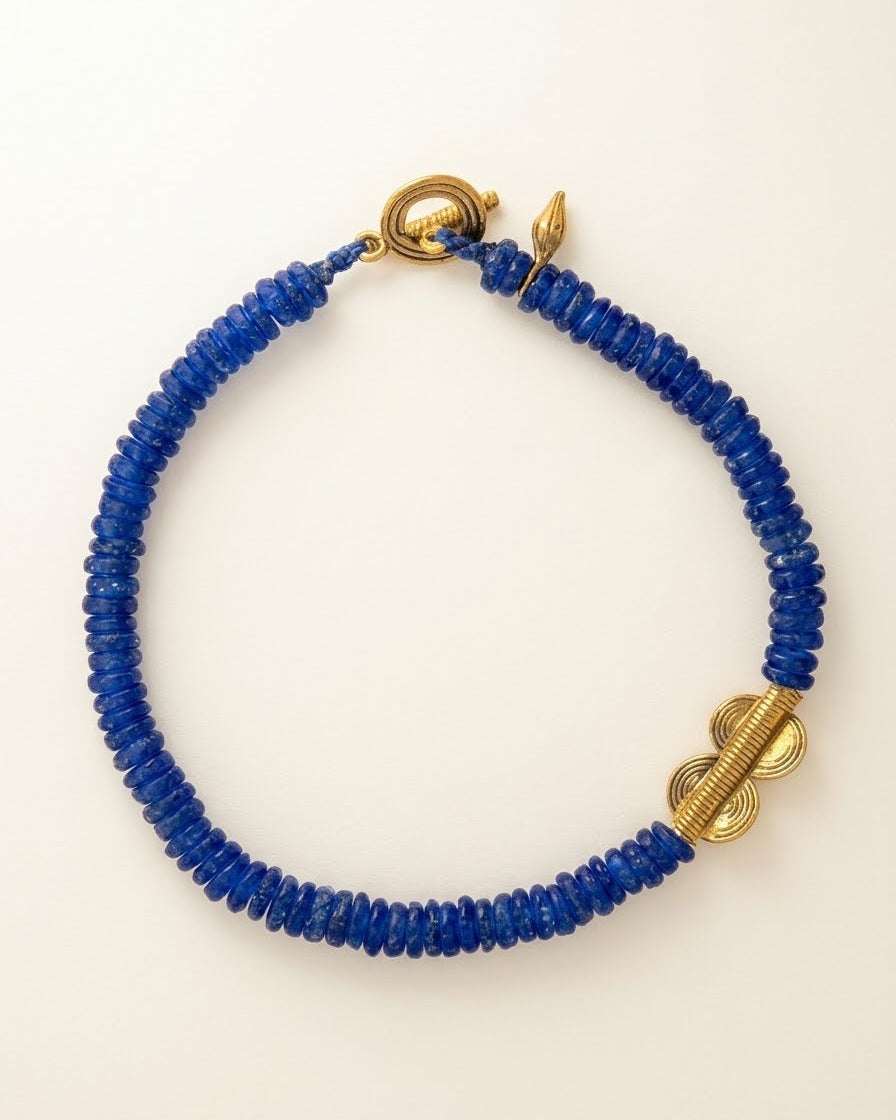
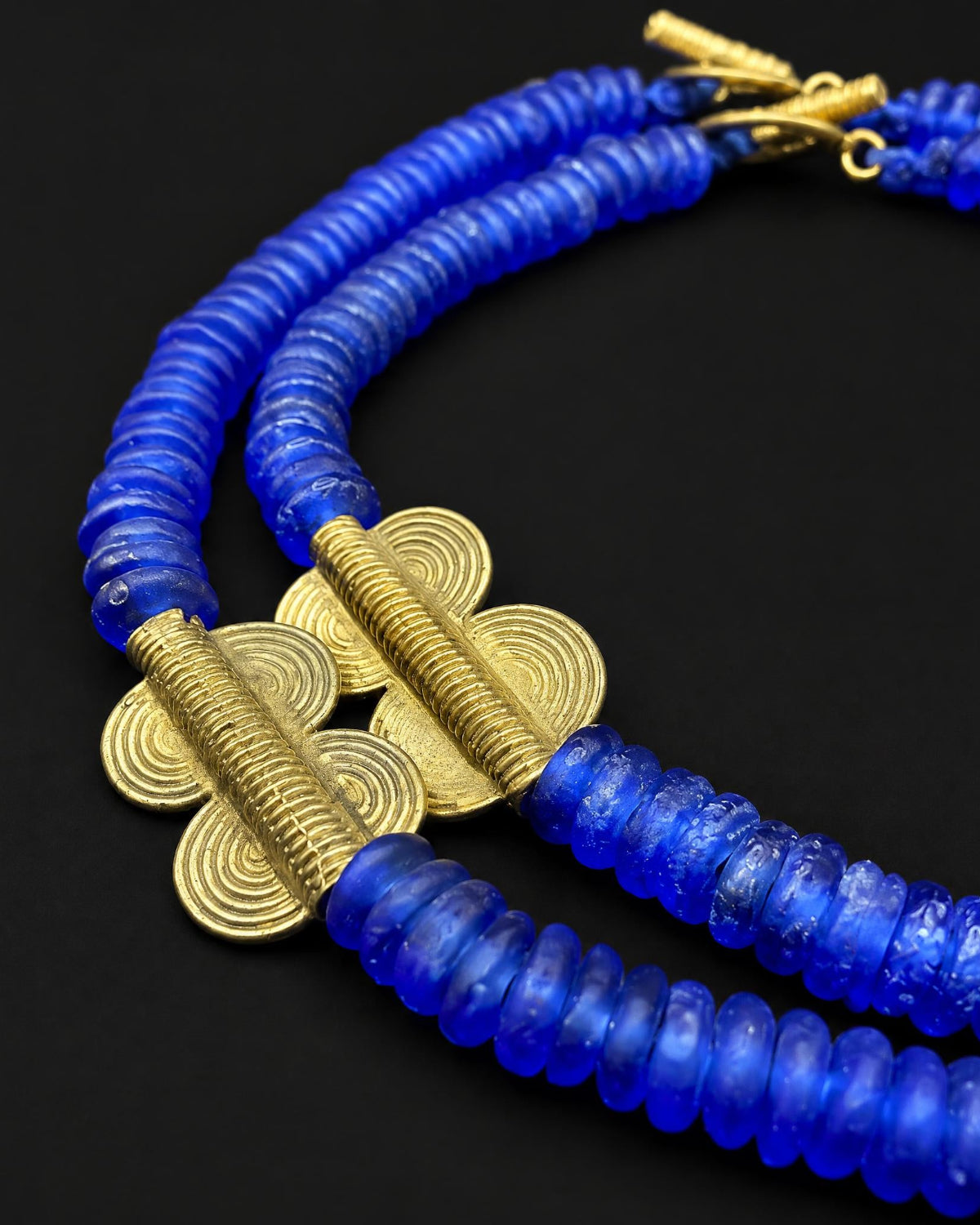
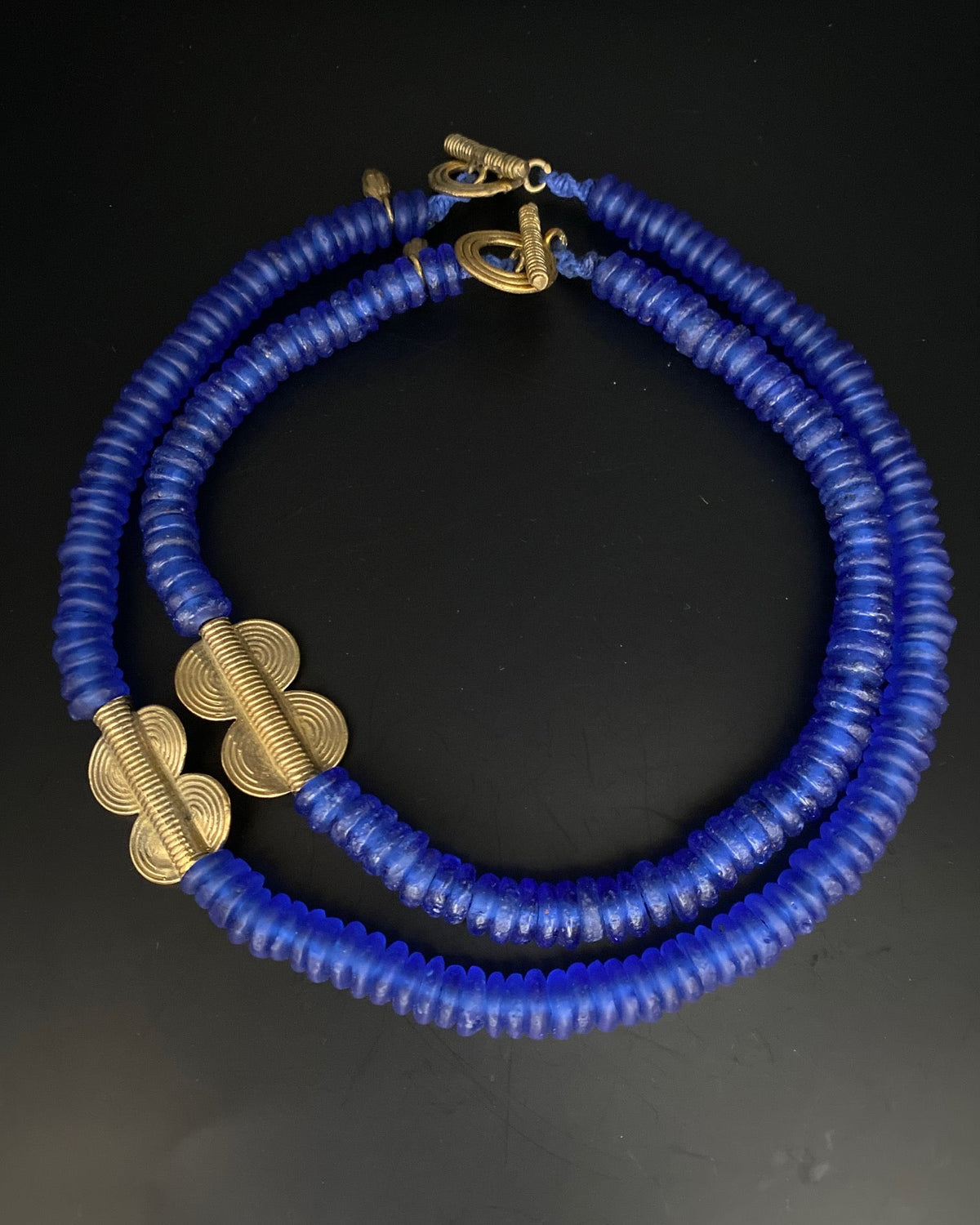


Blue Heritage Necklace
A single strand of royal-blue glass beads with a sculptural brass ornament set to the side. The beads are organically shaped and catch the light; the brass adds a warm contrast.
Two groups of artisans in Ghana make it. Near Accra, glass bottles are melted down and re-formed into beads. In Kumasi, the former Ashanti capital, brass-smiths model the brass pendants in wax, cover them in clay and cast them in recycled brass using the lost-wax method. The clay mould is broken to free each piece, so no two brass ornaments are alike.
The necklace looks generous but is light to wear, and comes in two lengths.
Materials: recycled glass, recycled brass
Lengths: 45 cm or 54 cm, end to end
Clasp: brass
Care: polish the brass with a soft cloth, which will be added to your parcel
Handmade throughout, so the glass and brass vary slightly from piece to piece.
Who made it?
The artisans behind your product
Our partner
Out of fascination for the west African beading tradition, we started working with two artisan groups in Accra and Kumasi during a field trip in 2024. One is based in the outskirts of Ghana's capital and recycles glass bottles to a myriad of colourful shapes of beads.
Modernity & Heritage
All across Ghana, textile and beading vintage pieces can be discovered, showing the extraordinary craftsmanship of West African artisans, some reminiscent of the early trade connections to Europe, such as beads from Venetian or Bohemian glassmakers, wax fabric from Indonesia over the Netherlands to be reinvented West Africa. These red vintage beads have become part of our collection, as a limited series.
Lost Wax casting
In the former capital of the Ashanti kingdom, known for its refined and unique goldsmiths, we have collaborated with two brass artisans who still master the craft of lost wax casting: every piece is formed in wax and later casted with recycled brass. The mould only works once, which is why every single piece is one-of-a kind.
Unique skills
The incredible skills of this artisans collective, operating from the brass village at the outskirts of Kumasi is humbling. Every single element was formed by hand, then covered with clay, dried, recovered and then burnt. The void gets filled with liquid brass which then cools down and gets cracked open. The mould breaks and the final piece appears to get polished to be mounted on your necklace.

